


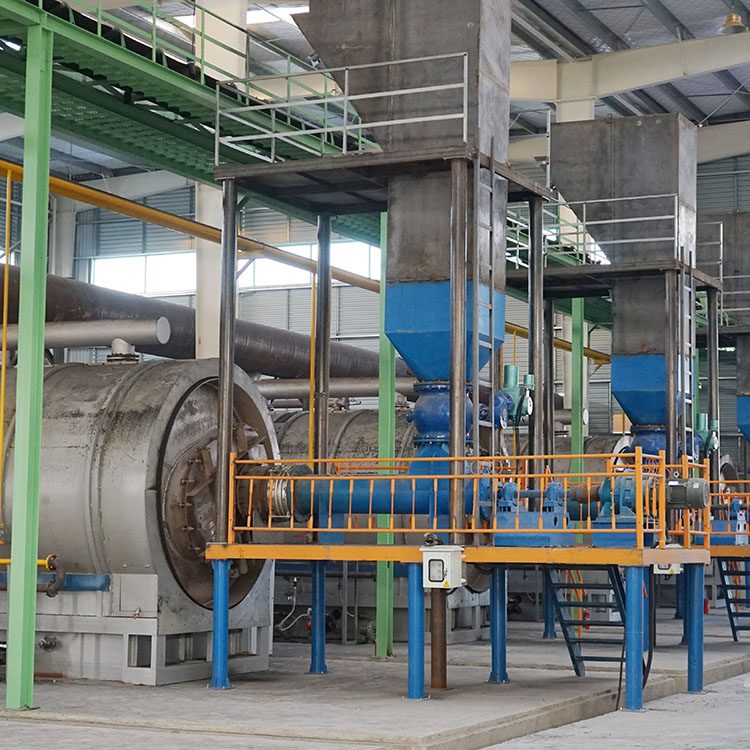
Used for pyrolysis treatment to convert organic waste into renewable energy or other useful chemical products. In the pyrolysis reactor, organic waste is thermally decomposed under high temperature conditions in an oxygen-deficient or low-oxygen environment, producing flammable gases, liquid oil and solid residues.
Continuous batch pyrolysis furnace is a common type of heat treatment furnace, characterized by intermittent heating process, that is, a certain amount of waste is incinerated at once. The advantage of this furnace type is that temperature control is relatively easy, it can adapt to various types of waste, and operating parameters can be flexibly adjusted to meet different treatment needs. The processing capacity of the batch pyrolysis furnace is relatively small, making it suitable for handling small waste.
The advantages of a continuous pyrolysis furnace lie in its energy-saving and large-scale production characteristics. Due to its ability to achieve continuous operation, it can handle a large amount of biomass raw materials and is suitable for industrial production. Meanwhile, continuous operation also helps to stabilize the pyrolysis process and improve the consistency of product quality and yield. These characteristics make continuous pyrolysis furnaces have broad application prospects in the biomass energy industry and waste treatment fields.

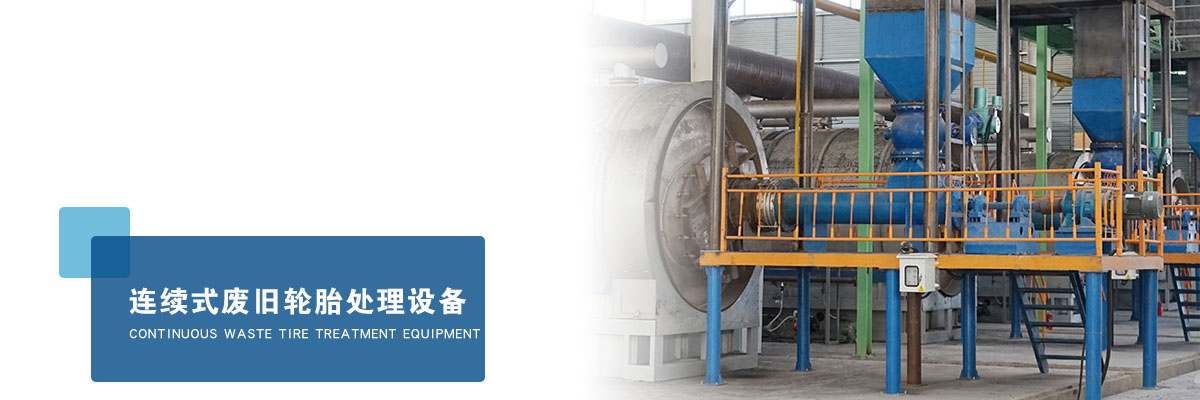
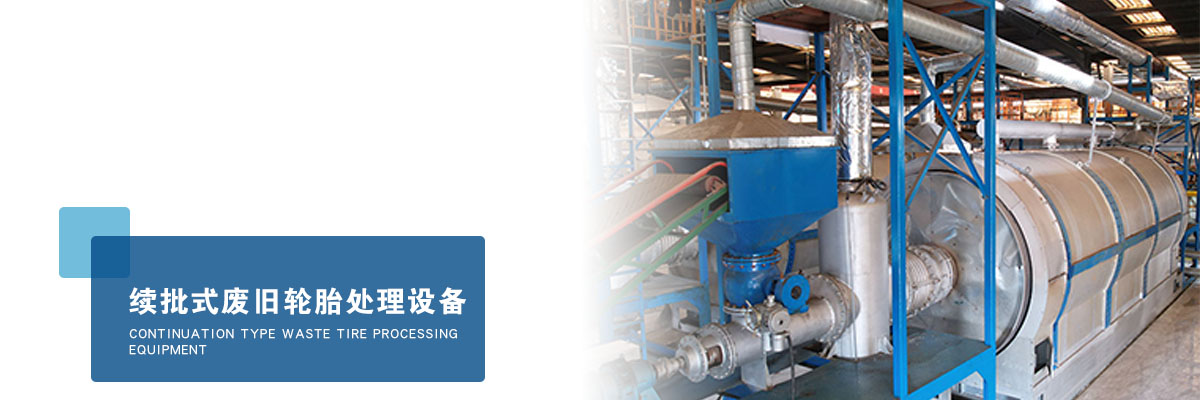
Continuous waste tire processing equipment
It is used to reduce, harmlessly treat and utilize resources of waste tires and rubber. It separates the moisture and organic matter in waste tires and rubber from the raw materials, meets the emission standards, and finally realizes the pyrolysis reduction reaction. The three major raw materials contained in waste tires: rubber, steel wire, and nylon fiber are completely separated, opening up a new way to recycle the scarce rubber resources, and no three waste pollution (dust, waste gas, waste water) will be produced during the production process ).
PRODUCT FEATURES

Continuous and efficient processing

Comply with European and American emission standards

Reliable and safe operation, high-quality output

Low operating costs and long energy consumption life

PLC intelligent control

Low staffing requirements
PRODUCT VIDEO

VIDEO INTRODUCTION
PRODUCT TECHNOLOGY
SPECIFICATIONS
Technical Parameters
TYPE
Details
Enter raw materials
Various types of waste rubber products such as automobile tires and engineering tires
Final product
Fuel oil, carbon black, steel wire, non-condensable combustible gas (system self-use)
Throughput
Customizable according to processing volume, high operating efficiency
Production form
A single piece of equipment has continuous feeding, continuous discharging and continuous operation.
Heating form
Adjustable constant temperature heating
Work pressure
Less than 100Pa
Cracking temperature
Low-temperature catalytic thermal cracking, the temperature can be adjusted according to different materials
Degree of automation
Fully automatic intelligent control, less labor and low labor intensity
Equipment life
Life span is not less than 10 years
Restore soil oil content
<0.3%, up to 0.05% or less if necessary
Environmental friendly
All emissions comply with the strictest emission index requirements
Final product application
Final product (yield)
Application
Fuel oil (45%-55%)
1. Used as feed oil in refineries;
2. Directly used as fuel oil;
Carbon black (30%-35%)
Used in tire manufacturing, cables, rubber rollers, conveyor belts and other rubber and plastic products;
Steel wire (10%-15%)
1. Remelting steelmaking;
2. Sand blasting steel shot;
Combustible gas (8%-10%)
1. The cracking system is for self-use;
2. Gas-fired power generation;
FOR MORE DETAILS, PLEASE FILL IN YOUR PERSONAL INFORMATION AND WE WILL CONTACT YOU AS SOON AS POSSIBLE
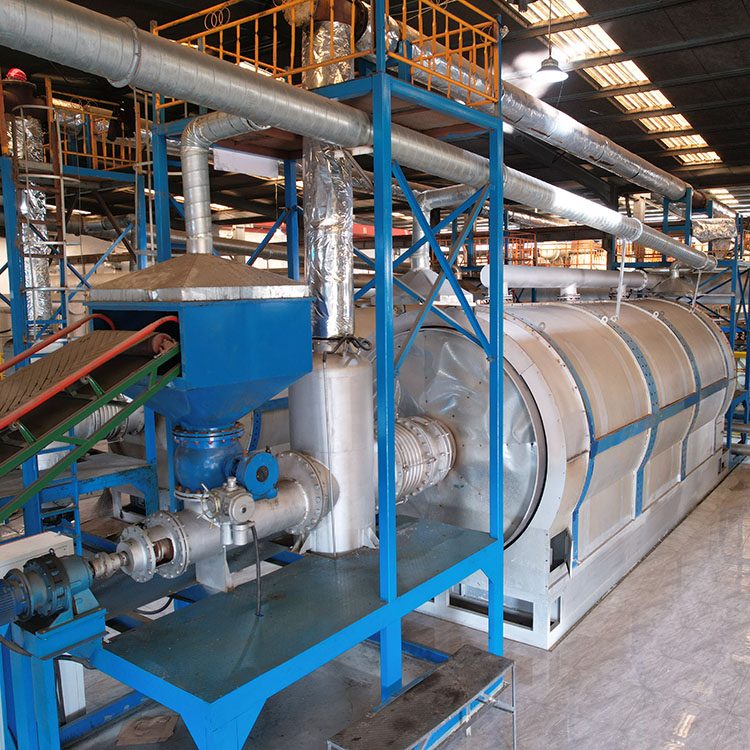
Continuous batch waste tire processing equipment
It is used to reduce, harmlessly treat and utilize resources of waste tires and rubber. It separates the moisture and organic matter in waste tires and rubber from the raw materials, meets the emission standards, and finally realizes the pyrolysis reduction reaction. The three major raw materials contained in waste tires: rubber, steel wire, and nylon fiber are completely separated, opening up a new way to recycle the scarce rubber resources, and no three waste pollution (dust, waste gas, waste water) will be produced during the production process ).
PRODUCT FEATURES
Continuous and efficient processing
Comply with European and American emission standards
Reliable and safe operation, high-quality output
Low operating costs and long energy consumption life
PLC intelligent control
Low staffing requirements
PRODUCT VIDEO
VIDEO INTRODUCTION
PRODUCT TECHNOLOGY
SPECIFICATIONS
Technical Parameters
TYPE
Details
Enter raw materials
Various types of waste rubber products such as automobile tires and engineering tires
Final product
Fuel oil, carbon black, steel wire, non-condensable combustible gas (system self-use)
Throughput
Customizable according to processing volume, high operating efficiency
Production form
A single piece of equipment has continuous feeding, continuous discharging and continuous operation.
Heating form
Adjustable constant temperature heating
Work pressure
Less than 100Pa
Cracking temperature
Low-temperature catalytic thermal cracking, the temperature can be adjusted according to different materials
Degree of automation
Fully automatic intelligent control, less labor and low labor intensity
Equipment life
Life span is not less than 10 years
Restore soil oil content
<0.3%, up to 0.05% or less if necessary
Environmental friendly
All emissions comply with the strictest emission index requirements
Final product application
Final product (yield)
Application
Fuel oil (45%-55%)
1. Used as feed oil in refineries;
2. Directly used as fuel oil;
Carbon black (30%-35%)
Used in tire manufacturing, cables, rubber rollers, conveyor belts and other rubber and plastic products;
Steel wire (10%-15%)
1. Remelting steelmaking;
2. Sand blasting steel shot;
Combustible gas (8%-10%)
1. The cracking system is for self-use;
2. Gas-fired power generation;
FOR MORE DETAILS, PLEASE FILL IN YOUR PERSONAL INFORMATION AND WE WILL CONTACT YOU AS SOON AS POSSIBLE